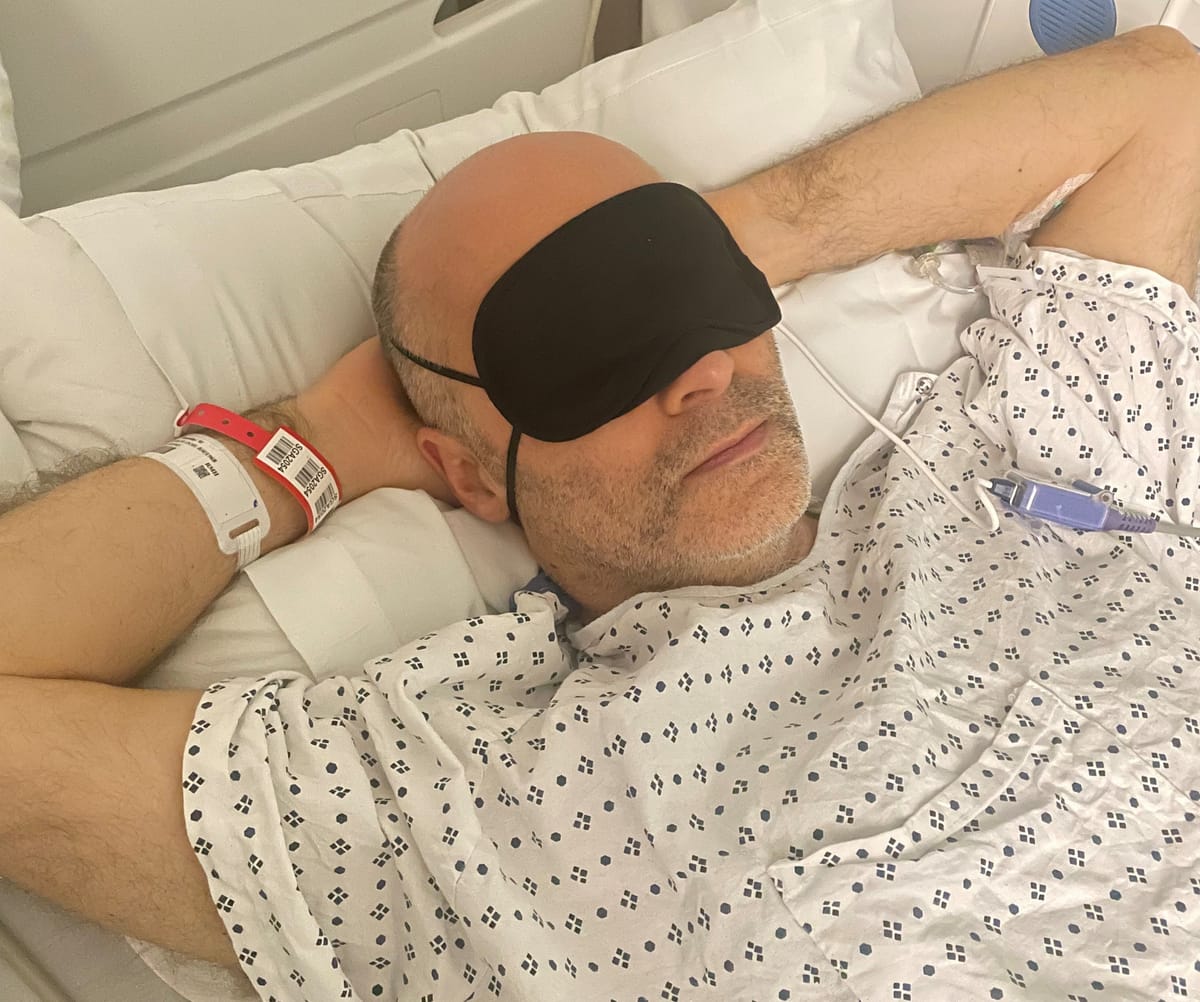
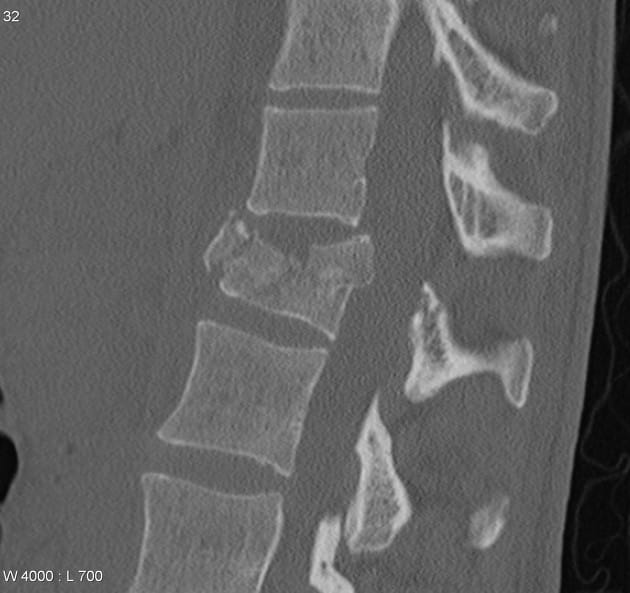
Welcome to my blog! Originally, I had planned for this blog to be about brewing, coding, and data science. Before I managed to write my first substantive post, I had a climbing accident; I forgot to clip in. I fell 12ish feet onto my butt (literally). It sounds a bit comical to write it that way, but it resulted in an L1 burst fracture. I was rushed to the emergency room of the closest hospital, and I had back surgery that evening. I've spent a little more over a month recovering from the accident, with many more months to come. I may go into more of the details of that day in future posts, but here I'm going to focus on things I've learned about spinal injuries.
I'm very lucky
Before I get to the things I've learned, I'd like to state that I'm very lucky in regards to my injury. While I don't feel lucky or unlucky, I do intellectually register that things could have been far worse. While I had some initial paralysis in my ankles and feet, I now have partial function in both. I'm able to walk with trekking poles or a walker. I can do all my personal care except trim my toenails and inspect the soles of my feet. I can drive. I'll probably walk unassisted sometime in the future. While I have trouble standing or sitting for more than a half hour, I'm hopeful that will improve with time. I don't know if I will ever jump and run again. In contrast, I met a number of folks in in-patient therapy who weren't so lucky.
What I have learned about spinal cord injuries
Phantom pain
Before my fall, I assumed that nerves either worked or they didn't. If someone had a spinal cord injury, their nerves had stopped functioning. Over time, they might regain function of those nerves or they might not. What I didn't understand was that the nerves might continue to function, but in different ways. Immediately after my fall, I was in excruciating pain. I'm talking 9 out of 10 (9 just to leave some room for something worse), intolerable pain. This pain wasn't in my mid-lower back at the point of injury, it was in my legs...from my knees on down. Remember when I said I landed on my butt; my legs weren't injured. There's video of the fall confirming my landing; I haven't watched it. I guess the rock gym has cameras everywhere.
So, I broke my spine, and I get intense pain in my lower legs. What gives? This is neuropathic pain. I like to refer to it as "fake pain" because it's not signaling injury in the area that hurts. It’s really not at all fake as it’s the most intense pain I’ve felt in my life. At and near its peak, I was pretty much willing try anything to relieve it, but it doesn't respond to normal pain medications. I'm wary of opioids, but I tried morphine and Oxycontin in the hospital, and they didn't make a dent. That might be a good thing, as I'm not needing to worry about getting off opioids. I'd probably still be on them if they worked.
What does seem to work is something called gabapentin. It's a medication directed at neuropathic pain. I was on the maximum dose for a while. At the end of my in-patient therapy, I cut back to 75% of the maximum dose. About a week ago, I cut back to 50% of the max dose, but then I had difficulty sleeping, so I upped it back to 75%. I'm now having difficulty sleeping again; this may be due to working new exercises in physical therapy resulting in 4 to 5 out of 10 pain/soreness for the following days. Some of that may be neuropathic pain, but at least some of it is muscular as well.
Loss of bladder and bowel control
Another spinal cord injury surprise was loss of bladder and bowel control. I fortunately didn't have complete loss of the latter, but I did have total loss of bladder control for a couple weeks. When I say loss of control, it doesn't mean that those functions just happen whenever they want to; I'm not "leaking". It means, they don't occur at all without help. So, I wasn't able to pee for about two weeks, and then the ability started to come back. At the beginning, it involved barely turning faucet on to produce dripping sounds and mentally imagining dogs peeing, hoses running and waterfalls. Over time, I was able to regain more function, and at this point, I'm about 80% for both bladder and bowel. I spend a lot of time in the bathroom waiting for things to happen. Once again, I'm lucky here. I don't need to use suppositories. I originally had an indwelling catheter, I transitioned to nurses performing in and out catheters on me, I then learned to do my own in and out catheters, and finally, my catheter volumes were low enough (due to me being able to pee enough) that I was able to stop the catheters all together. There have been lots of celebrations for improvements throughout my healing process, and the "no more catheters" one was a big one.
Learning to walk again
Once again, I thought that a person with a spinal cord injury had non-functional nerves. This might keep them from walking (or worse). I assumed that the nerves were severed in some way. If they grew back (maybe resealed), the individual would regain function again. I now realize that those nerves can all still be there, but their ability to fire correctly has been lost. They need to be retaught how to fire at the right times. There's also a level of resting tension in muscles that is maintained by signals from the nerves. My right leg is currently substantially weaker than my left after the injury. If you're not a physical therapist, the difference is perhaps most obvious when I try to flex my ankle. I have a great range of motion when I try to point my toes and then flex my left foot; I can pull that foot back to almost ninety degrees. My range of motion is much more limited in my right foot. I'm going to guess I have sixty degrees of flex there. For both feet, this is a great improvement since the accident.
My left foot came back faster, and I remember, maybe two weeks after the accident, feeling the difference between my left and right calves. My left calf was reasonably tight, and I could flex it to hard. My right calf was just floppy mush. There was no resting resistance there, and I couldn't flex it. It was just dead weight. Pre-injury, it was my understanding that you had to stop working out for three weeks or more before you started to substantially lose muscle. I mentioned this to one of my physical therapists, and she said it was different with spinal cord injuries because the muscles weren't getting any signals from the nerves. I didn't really understand what she was telling me at the time, but, after "taking data" on my calves, this seems to make sense.
So, you get those nerves firing by using them, and you have to train them to fire at the right times by using them at those times. Enter learning to walk again. I have weak ankles, and I have weak hips as well. If I'm laying on my left side in bed and I want to raise my right leg to reposition, I cannot do it without using my hands or just rolling over. Walking involves using my ankles and the muscles in my hips, at the right time and in coordination with one another. It also involves keeping my weight over the correct leg at the correct time. I haven't had to think so hard about how to walk since I was a toddler. I don't remember that, and I've lost my journal from that time (it must have been in one of the boxes lost in the last move). I think I am coming up on advanced toddler skill for walking. I can do it, but somewhere between 10 and 100 steps, I'm going to go down. Unfortunately, my head is a lot higher off the floor that it was was back then. Maybe I need a helmet.